A Perfumer’s Notebook: The Silence Between Rose and Fir
Les Secrets d'un Nez : Conversation entre Rose et Cèdre
Scent is the most private key memory has. And the hardest part of a good perfume is almost always deciding what to leave out.
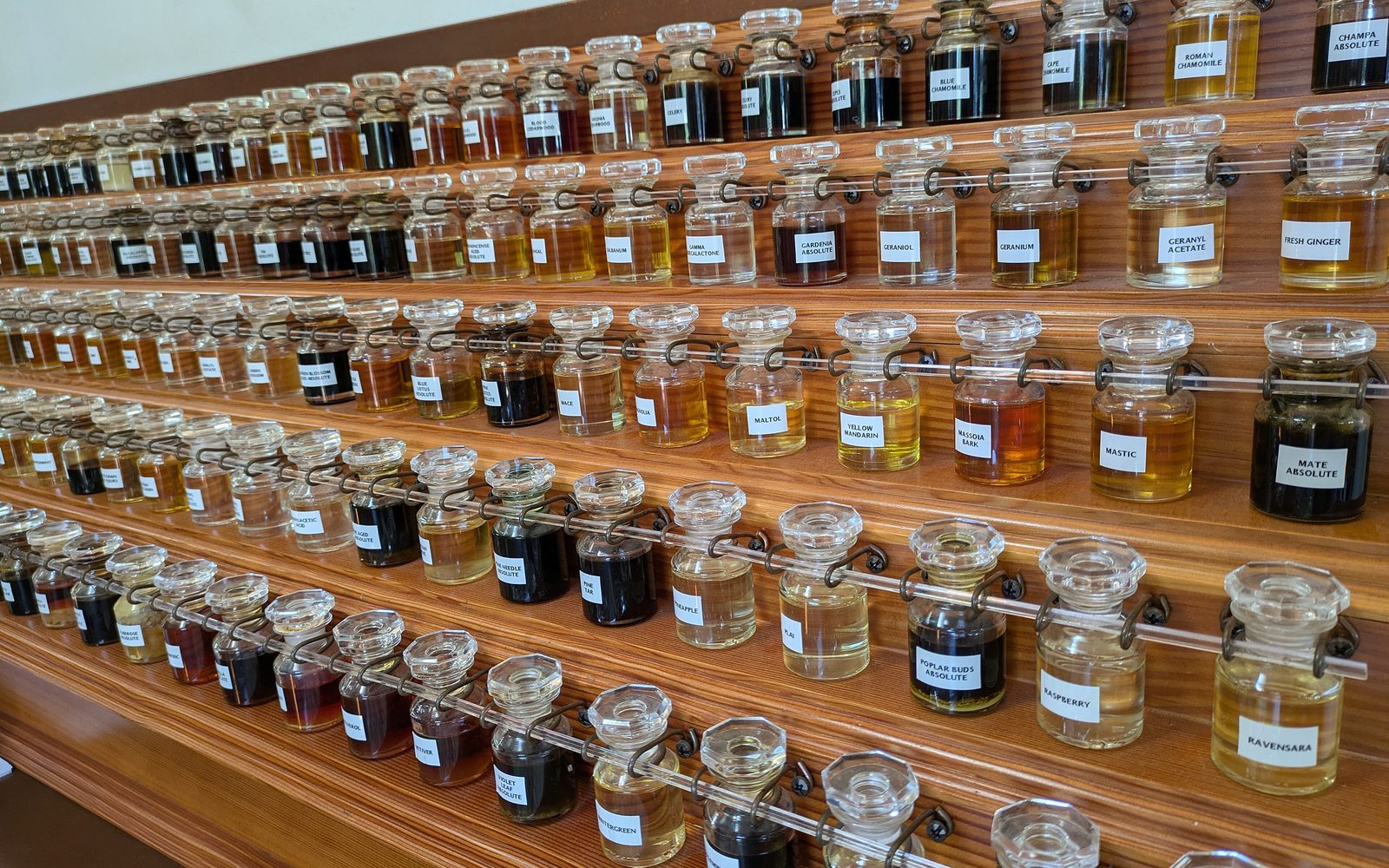
In perfumery, the difficult part has never been stacking up expensive materials. It is finding, somewhere between excess and restraint, the one string that vibrates. Rose is the most immediately pleasing of all materials, and for exactly that reason the easiest to make ordinary.
The pyramid is a timeline
Top, heart and base are not three physical layers of scent stacked on each other. They are three slices of the same mixture unfolding over time on skin. The lighter the molecule and the lower its boiling point, the sooner it leaves — the limonene in bergamot is largely gone within half an hour, while the santalol in sandalwood can stay on skin for a whole day. What people call longevity is really the proportion of heavy molecules in the formula.
A good scent should be a whisper at the ear, not an announcement of your arrival to the whole room.
Sophie de Guise
What the fir is doing here
Siberian fir oil carries a clear resinous, green edge, and its job is to set a ceiling on the sweetness of the rose. Without that restraint, centifolia slides quickly into something candied in the heart. A great many decisions in perfumery work this way: not what you added, but what you used to hold something else down.