BestsellerNew

Full INCI list and functional classes

10 ingredients, in label order. 0 of them are fragrance allergens that EU Regulation EC No 1223/2009 Annex III requires to be declared individually — most occur naturally in rose, bergamot and tonka bean, and the longer that list runs, the more natural fragrance material a formula generally carries.

Ricinus Communis Seed Oil Castor seed oil Emollient Viscous and strongly adhesive, which is the key to color payoff and wear in a lipstick.
Copernicia Cerifera Cera Carnauba wax Viscosity control It melts at about 83°C, the highest of the natural waxes, so a very small amount is enough to set a stick.
Cera Alba Beeswax Viscosity control Gives a balm its structure.
Camellia Japonica Seed Oil Camellia seed oil Emollient Mostly oleic acid, spreads beautifully, and is often used in lip formulas.
Rosa Canina Fruit Oil Rosehip seed oil Emollient High in linolenic acid, which also makes it oxidize more readily, so it needs an antioxidant alongside it.
Butyrospermum Parkii Butter Shea butter Occlusive Solid at room temperature, and both occlusive and emollient.
Tocopherol Vitamin E (tocopherol) Antioxidant Vitamin E. In a formula its first job is keeping the oil phase from going rancid.
Mica Mica Colorant A natural mineral that provides shimmer and slip.
Titanium Dioxide Titanium dioxide Colorant Used in this formula for color and coverage. It is also a mineral UV filter, but this product has had no sun protection efficacy testing filed for it, and therefore makes no sun protection claim whatsoever.
Iron Oxides Iron oxides Colorant The combination of yellow, red and black iron oxides is what determines every complexion shade.
Lèvres · Lips

Rouge Couture Satin

Couture Satin Lipstick

¥460 4.98 760 reviews 3.8g / 0.13 oz

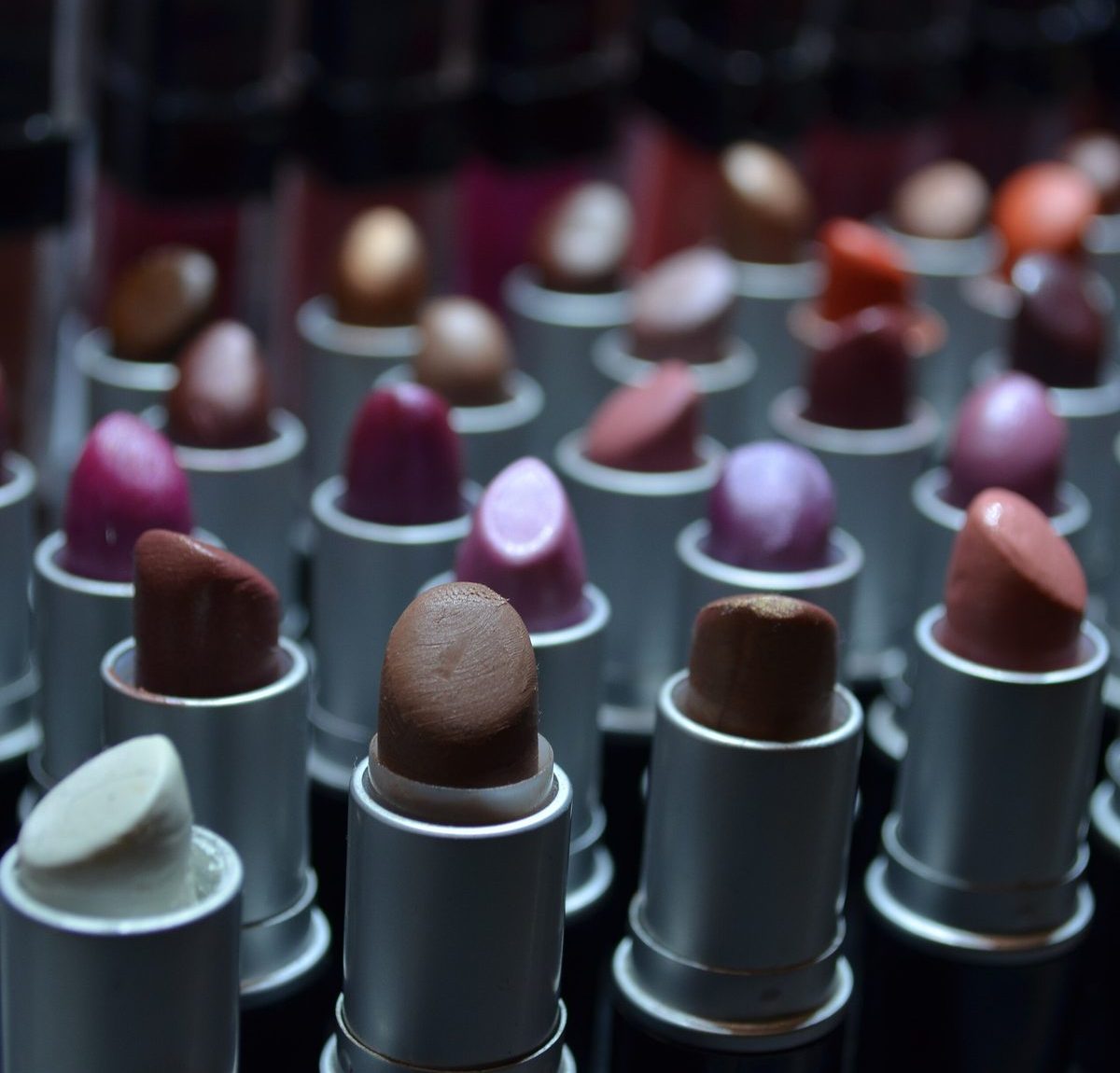
A bullet built on camellia seed oil and carnauba wax: saturated colour that never pulls the lip dry.

Shade · Teinte — #518 Rose Givrée Frosted Rose
What to expect
  • Highly saturated: full colour in one pass
  • Conditioning oils in the bullet, so it settles less into lip lines
  • Maison panel test: of 104 participants, 79% reported the colour holding well before eating
  • Natural cocoa butter scent, no added fragrance
About the claims on this page This site is a theme demo and Maison Rosée is a fictional house. Every percentage on this page is labelled as a Maison panel test, not the conclusion of a clinical trial. Once you have bought the theme, replace all of it with figures of your own that you can substantiate.

How a lipstick feels is decided by the ratio of wax to oil. This one takes its firmness and heat tolerance from carnauba wax, its slip from camellia and castor seed oils, and the balance between them took more than thirty adjustments to settle — too firm and it drags, too soft and it loses its shape in summer. Six shades run from a cool rose all the way to blackcurrant, day into evening.

The wax-to-oil ratio decides everything

The entire feel of a lipstick hides in that ratio. Carnauba wax melts at close to 83°C, the highest of any natural wax, so only a very small proportion is needed to hold the bullet upright through summer; everything left over goes to the oil phase, where slip comes from.

How the shades were chosen

Looking brighter is not mysticism — it is the direction of contrast between lip and skin. Cool complexions gain contrast from blue-leaning reds (#520, #808); warm complexions sit better with orange-leaning reds (#312, #405). The Shade Matching page gives you a checkable recommendation in ΔE00 and hue angle.